
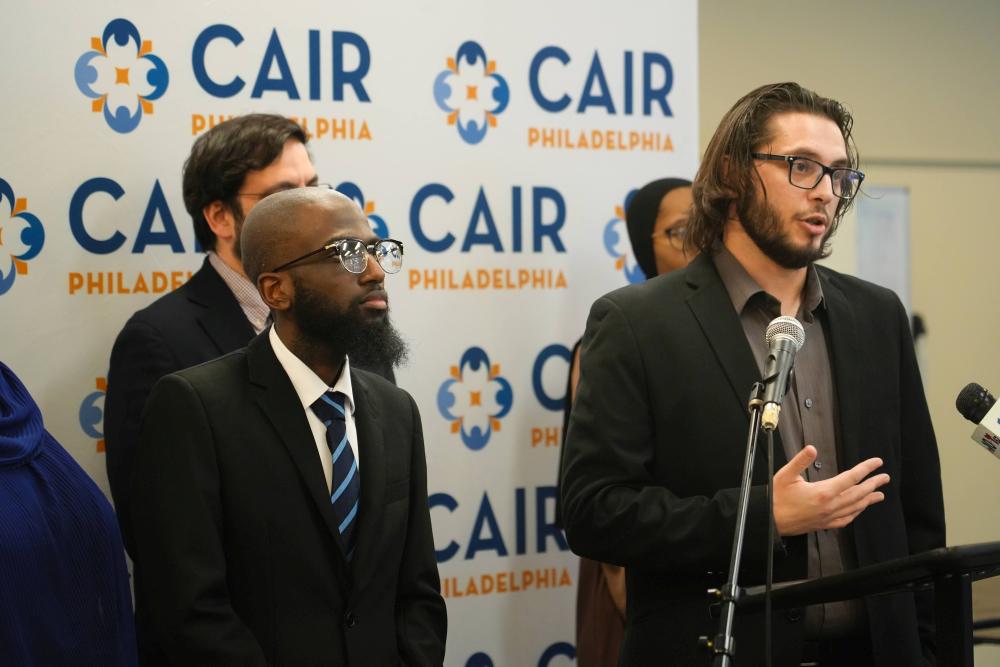
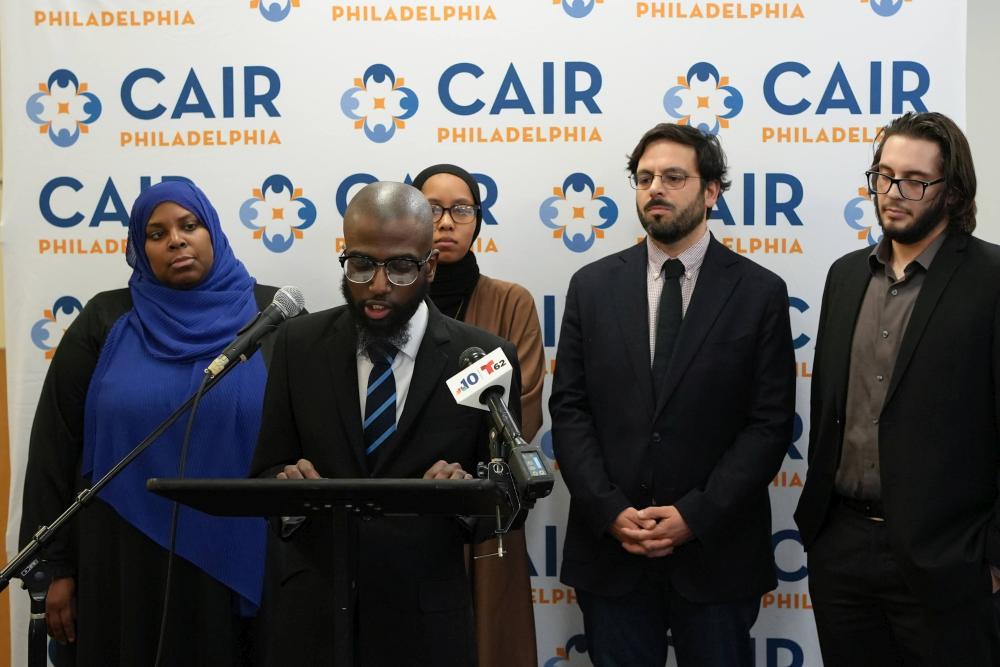
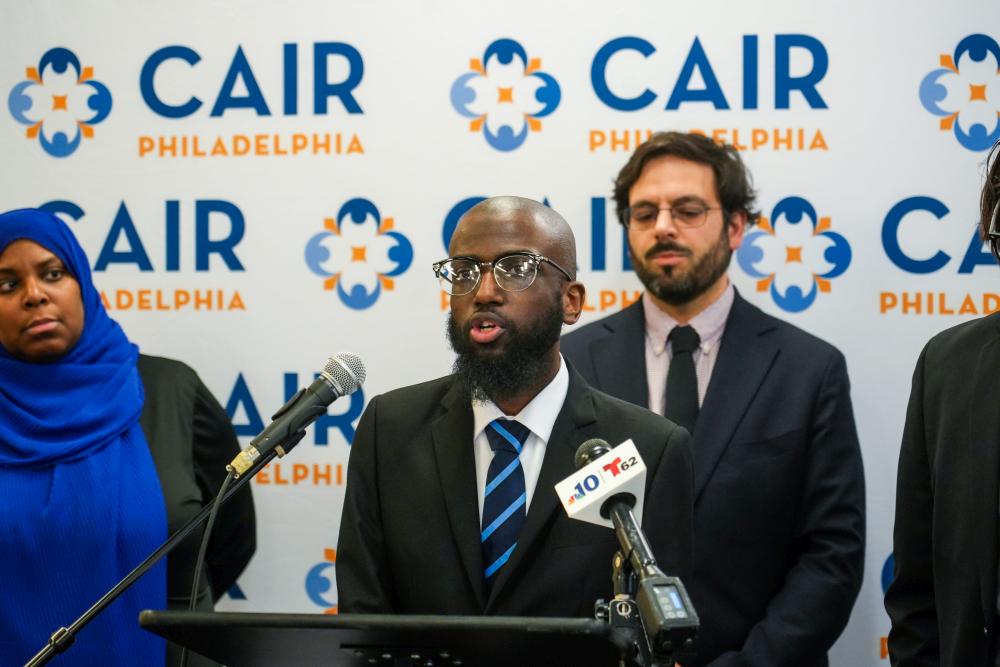
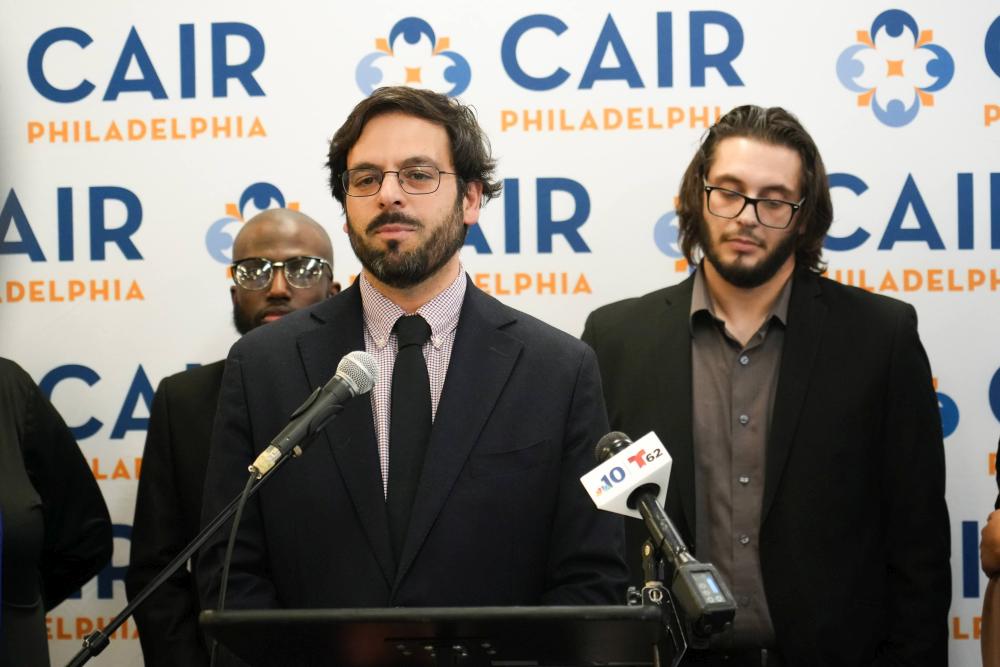
(PHILADELPHIA, PA, 2/25/2026) – On Wednesday, Feb. 25, the Philadelphia chapter of the Council on American-Islamic Relations (CAIR-Philadelphia) held a news conference to announce the filing of a complaint with the Pennsylvania Human Relations Commission (PHRC) on behalf of a Muslim trainee in a Philadelphia-based culinary training program alleging religious discrimination after program officials refused to consider basic faith-based accommodations and instead required him to “voluntarily resign.”
The complaint alleges that the trainee requested several modest and reasonable religious accommodations, including:
- The ability to attend weekly Jummah/Friday congregational prayers;
- A brief 5-10 minute window to perform daily obligatory prayer; and;
- Practical adjustments, when feasible, to avoid direct contact with pork and alcohol in accordance with his sincerely held religious beliefs.
WHAT: Announcement of PHRC Complaint Filing
WHO: CAIR-Philadelphia Legal Team and Affected Trainee
WHEN: 1:30 p.m., Wednesday, February 25, 2026
WHERE: Friends Center, 1501 Cherry Street, Philadelphia, PA 19102
CONTACT: Ahmet Tekelioglu, CAIR-Philadelphia Executive Director; 617-401-5397; atekelioglu@cair.com
The complaint alleges that the program’s actions amount to exclusion from a publicly facing training opportunity on the basis of religious creed, in violation of the Pennsylvania Human Relations Act. It further asserts that categorically rejecting reasonable religious accommodations — without individualized assessment — undermines the fundamental principles of religious liberty and equal access protected under state civil rights law.
“Religious liberty does not mean an employer or training institution gets to decide what someone else’s faith requires,” said Adam Attia, Esq., Legal Director of CAIR-Philadelphia. “When an institution refuses to even engage in a conversation about modest, reasonable accommodations — and instead pushes someone out for requesting them — that raises serious civil rights concerns. The law protects sincerely held religious beliefs, not an administrator’s personal interpretation of those beliefs.”
BACKGROUNDER:
According to the forthcoming filing, rather than engage in a good-faith interactive process to explore possible solutions, program staff allegedly rejected the requests outright and declined to engage in any dialogue.
The trainee provided contact information for the Council on American-Islamic Relations (CAIR) in an effort to facilitate constructive communication and resolution. Instead of working collaboratively, he alleges he was summoned to a meeting where staff informed him they “would not change the curriculum just for you.”
During that meeting, a staff member allegedly acknowledged awareness that Muslims do not consume pork or alcohol but asserted that Muslims are “allowed to touch it” — effectively substituting her own interpretation of Islamic teachings for the trainee’s sincerely held religious beliefs.
The complaint will assert that employers and training institutions do not have the authority to reinterpret or narrow an individual’s faith. Civil rights law protects sincerely held religious practice, not a third party’s view of what a religion “really” requires.
Following the meeting, the trainee alleges he was told he must resign, his identification badge was collected, and he was processed out of the program. He was later informed that his participation would be recorded in a manner preventing future readmission.
CAIR’s mission is to protect civil rights, enhance understanding of Islam, promote justice, and empower American Muslims.
– END –
CONTACT: Ahmet Tekelioglu, CAIR-Philadelphia Executive Director; 617-401-5397; atekelioglu@cair.com.