Upcoming Events
A Thank You, and a Koran, for Obama
By Andrea Fuller
President Obama will soon receive a thank-you gift for his speech to the Muslim world in Cairo. Inspired by the address, in which Mr. Obama quoted the Koran, the Council on American-Islamic Relations plans to distribute 100,000 copies of the Koran to national, state and local leaders.
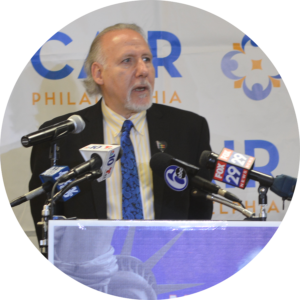
The council’s national executive director, Nihad Awad, said at a news conference in Washington today that the speech, in which Mr. Obama called for the end to mutual suspicion between Americans and Muslims, was “inspiring” and “historic.”
The council is soliciting donations to pay for the books; at the national convention of the Islamic Society of North America on July 5, the name of one donor will be chosen as sponsor of the Koran that will be sent to Mr. Obama.
In a public opinion survey done by the council, almost 60 percent of Americans said they were “not very knowledgeable” or “not at all knowledgeable” about Islam. Mr. Awad said that the organization hopes to educate Americans about Islam to combat prejudice.
Over the next 10 years, the council plans to distribute one million copies of the text to the American public through its “Share the Quran” campaign.
“This project is pure education,” said Mr. Awad, who said the council was not attempting to proselytize.
Mr. Obama has said he hopes to reduce tensions between America and the Middle East, and between Muslims and non-Muslims. Mr. Obama’s father was Muslim, though the president is Christian.
“There must be a sustained effort to listen to each other; to learn from each other; to respect one another; and to seek common ground,” he said in his Cairo address.
Focus Article: Study on Islam and the West – Mutual Anxiety
Review by Mona Naggar
Germany’s Institute for Foreign Cultural Relations has brought forward an intercultural study on political violence in the West and the Islamic world, past and present. This study, worked on by one German and two Arab scholars.
In his attempt to open a dialogue with the Islamic world political scientist Jochen Hippler critically examines modernity and its relation to violence. Since the Enlightenment the hope has existed that societies and states would be able to resolve their conflicts with a minimum of violence.
The Western world has in fact struggled hard to reduce interstate violence during the past few centuries. This is connected above all with the development of state orders, functioning judicial systems and internal mechanisms for regulating violence.
But the modernization process has also produced violent phenomena of unimaginable magnitude such as colonialism, Stalinism and German fascism. Non-Western societies, too, experience on their path to modernization genocide and wars of varying magnitude, such as the Armenian genocide at the beginning of the twentieth century or the division of Pakistan in the 1970s. Read more…
—
World Commentary
Focus Article: Muslim women: no back doors, no back seats
by Seema Jilani
Houston, Texas – At my mosque, like almost all mosques across the country, women pray upstairs or at the back of the prayer hall. Watching elderly and pregnant women, often with young children attached at the hip, painstakingly traverse the back entrance and hike up concrete stairs evokes a cognitive dissonance within me as a young, progressive Muslim woman. It triggers the question: can women take on truly influential roles and achieve their full potential if they are consistently told to remain in the back of mosques, both literally and figuratively? Read more…
—
World Commentary